How to build an app without coding: a step-by-step guide
How to build a working app without code: plan it on one page, describe it to an AI app builder, check the first version, add payments and publish.
To build an app without coding, write down who it is for and what they do in it, describe that to an AI app builder, check the first version it makes, and improve it one change at a time before you publish. The builder handles the code; your job is to be clear about the product. Here is the whole path.
What do you need before you start?
A one-page plan, not a specification. Answer these five questions in a sentence or two each:
| Question | Example: a cooking school |
|---|---|
| Who uses it? | Students who book classes, and the school's staff |
| What do they do? | Browse classes, book a seat, pay, see their bookings |
| What has to be saved? | Classes with dates and seats, bookings, students |
| What do people pay for? | A deposit at booking |
| How should it feel? | Warm and simple, with large food photos |
How do you build an app without coding, step by step?
Choose what you are making
A website, a web app, or an app that also runs on Android. You can start with one and add the other later.
Describe it in one message
Use your plan: who, what they do, what is saved, what they pay, how it feels. Attach a logo or a sketch if you have one.
Answer the builder's questions
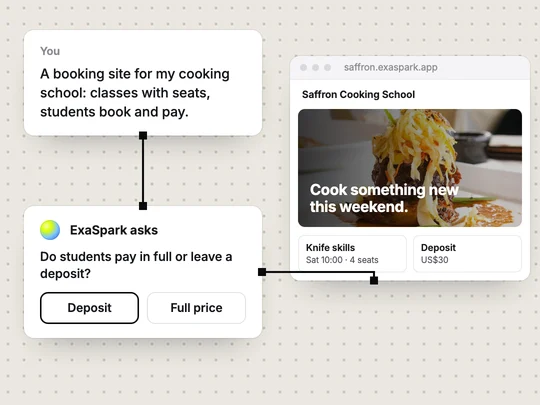
If something important is unclear, a good builder asks before it guesses.
Check the first version as a user would
Sign up, book, pay, sign out, sign in again. Note what is wrong.
Change one thing at a time
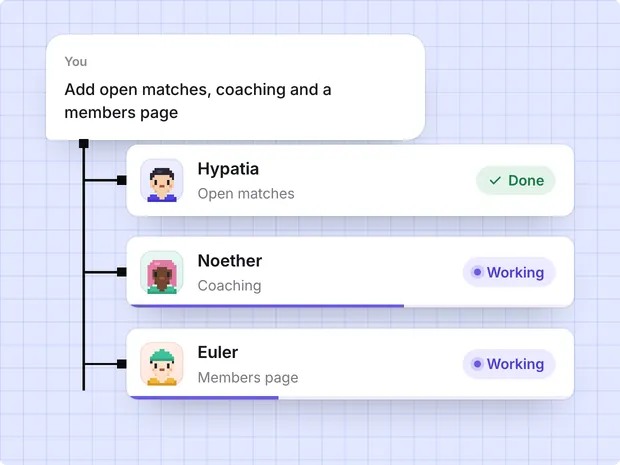
"Add a page for teachers" or "Only staff can edit the timetable". Every change becomes a version you can go back to.
Test with three to five real people
Watch them use it without help. Where they hesitate is your next change.
Publish and watch
Put it on a link, then your own domain, and look at what visitors actually do.
What does the AI app builder do for you?
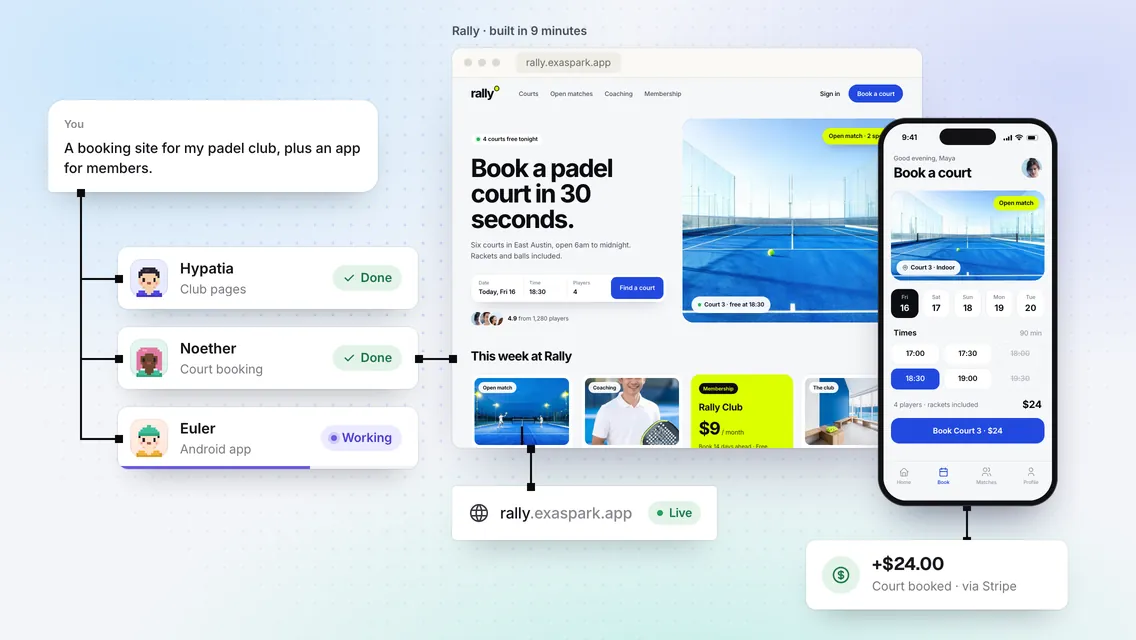
It turns the description into the parts an app needs and connects them: the pages, the database behind them, sign-in and who can see what, and the checkout. In ExaSpark, people sign up with Google, Apple or email, data is described in plain words, Stripe checkout handles one-off payments and subscriptions, and publishing gives you a free exaspark.app link. How ExaSpark works follows one request from start to finish.
What still needs your judgment?
- Deciding who the app is for and what it should not do.
- Checking that the data and permissions match how your business works.
- Pricing, and what happens when a payment fails or a customer wants a refund.
- Testing with real people before you spend on ads.
None of these need code. They need the knowledge you already have about your customers.
When do you still need a developer?
For unusual requirements: connecting to an old internal system, strict regulation about where data is kept, or performance needs far beyond a typical app. For booking sites, stores, portals, internal tools and most first versions, describing the app is enough. If you do code, you can still look at what was built and take it further.
Turn your one-page plan into a first version with a request like this one, then improve it step by step:
A booking site for my cooking school: classes with dates and seats, students sign in and book, a $30 deposit at checkout, and a page where students see their bookings. Warm and simple, with large food photos.
Frequently asked questions
- Can I really build an app without coding?
- Yes. AI app builders such as ExaSpark turn a plain-language description into a working app with pages, a database, sign-in and payments, and you change it by describing what should be different.
- How long does it take to build an app without code?
- A first version can be ready in minutes. Getting it right for real customers takes longer: a few rounds of changes and a short test with real people.
- What kind of apps can I build without coding?
- Booking sites, online stores, client portals, internal tools, members areas and first versions of most products, on the web and, with ExaSpark, as an Android app.