Do you need a technical co-founder in 2026?
When a non-technical founder can build without a technical co-founder, when you still need an engineer, and what you must own either way.
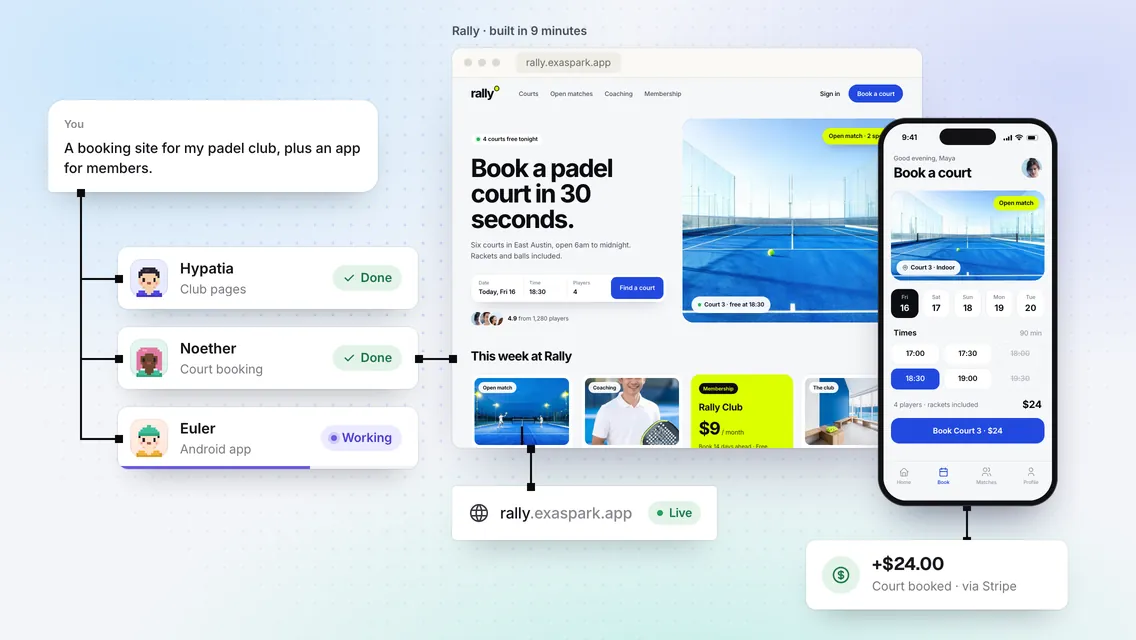
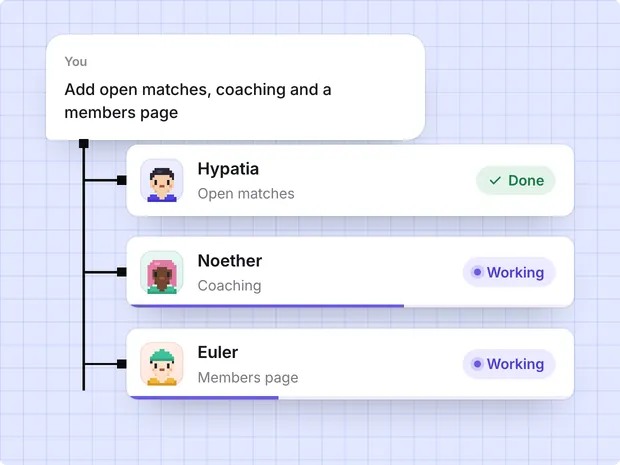
For most first versions, no. If what you are building is a booking site, a store, a client portal or a tool for a specific trade, an AI app builder can produce it with its data, sign-in and payments, and you can put it in front of customers without a technical co-founder. You need one, or at least an experienced engineer, when the technology is the product, when you connect to systems that are complex or regulated, or when growth turns reliability into the main risk.
What does a technical co-founder actually do?
More than write code. In an early company, the technical co-founder decides how the product is built, keeps it running, chooses what not to build, and later hires and leads the engineers. They also share the risk, which is why the role is usually paid mostly in equity rather than salary. Some of that work can now be done by a tool. Some of it cannot.
| Part of the job | Can an AI app builder cover it? | What that means |
|---|---|---|
| Building a first version with pages, data, sign-in and payments | Yes, for standard apps | Booking sites, stores, portals and internal tools |
| Publishing, hosting and a custom domain | Yes | Part of the builder's plan |
| Watching errors, speed and uptime | Mostly | The numbers are there; someone still has to act on them |
| Deciding what to build and what to leave out | No | Product judgment, and it is yours |
| Unusual integrations, regulated data, heavy load | Partly at best | Needs an engineer who answers for the system |
| Hiring and leading an engineering team | No | Needs someone who has done it before |
When can a non-technical founder build without one?
When the software is a well-understood kind and the hard part of the business is somewhere else: finding customers, pricing, service, operations. A cooking school's booking site, a membership area for a fitness coach or a quoting tool for a cleaning company all matter to those businesses, but none of them is what makes the business different. These are good signs:
- Customers would describe what you sell without mentioning technology.
- The first version fits on one page: who uses it, what they do, what is saved, what they pay.
- The data is ordinary: accounts, bookings, orders, messages.
- You can test demand with a page and a checkout before building more. How to validate an app idea shows how.
When do you still need an engineer?
- The technology is the product. A developer tool, a new kind of model, real-time collaboration: anything where how it works is what you sell.
- Complex or old integrations. Connecting to a legacy internal system, a bank, or a partner whose interface is poorly documented.
- Regulated data. Health, financial or children's data, or contracts that dictate where data lives and who may see it.
- Reliability at scale. When an outage costs real money every minute, someone has to own performance and incidents.
- Technical due diligence. Some investors and large customers want to speak to the person accountable for the technology.
In these cases an AI builder is still useful for prototypes, internal tools and the website around the product. It does not replace the person who answers for the system when something goes wrong.
What does a non-technical founder have to own anyway?
The parts that decide whether the product becomes a business. A technical co-founder does not take these over, and neither does a tool:
- Customers. Who has the problem, how they describe it and what they pay to solve it today.
- Distribution. How the first hundred people find you, and what each paying customer costs to win. How to get your first 100 users covers the start.
- Money. The price, the margin, and whether the numbers still work once you pay for ads. See How do apps make money?
- Quality. Using the product the way a customer would, every week, and noticing what breaks.
This is the work ExaSpark is built around. The app, its publishing, payments, ads and numbers sit in one workspace, so one person can run the loop from building to selling. Why AI-built apps stall after launch explains why that loop matters more than the code.
If you do need technical help, how should you get it?
Build the first version yourself
A working app with real users makes every later conversation concrete, whether it is with a candidate, an agency or an investor. Quickstart gets you to a first version.
Hire for a defined job first
A contractor or a part-time engineer for one integration or a security review, paid for the work, before you offer anyone a share of the company.
Look for a co-founder when the need is permanent
Once the technology is central to the business, find someone who shares the risk, and agree roles, decisions and vesting in writing.
Keep the keys in the company
Every account, the code and the data should be held in the company's name, not in one person's.
To find out how far you get on your own, start with the smallest version a customer would pay for:
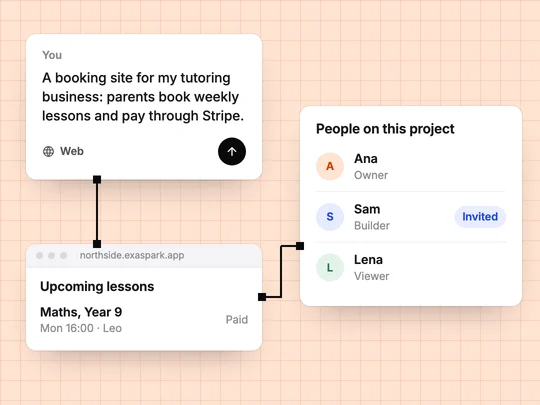
Build a booking site for my tutoring business: parents sign in, book weekly lessons, pay $40 per lesson through Stripe, and see past and upcoming lessons. Only I can edit the timetable.
Frequently asked questions
- Can a non-technical founder start a company without a technical co-founder?
- Often, for the first version. AI app builders produce standard apps with data, sign-in and payments from a description. A technical co-founder becomes important when the technology is the product, the data is regulated or the system has to run at scale.
- When should a startup hire its first engineer?
- When a specific technical need keeps coming back, such as an integration, a security requirement or performance, or when the product has outgrown what a builder covers. Start with a defined job before offering a co-founder role.
- What should a non-technical founder understand about technology?
- Enough to test the product and ask good questions: how data is stored, who can see what, how a payment is confirmed and how to roll back a bad change. None of that requires writing code.