What is web hosting, and what does your app need?
What web hosting is, how a static website differs from an app with a server and database, the main types of hosting, and what you pay for.
Web hosting is the service that keeps your website or app online: a computer connected to the internet day and night that sends your pages to every visitor who asks. Your domain name is the address; hosting is the place at that address. A simple website needs little more than storage for its files, while an app that signs people in, saves bookings or takes payments needs a server that runs code, with a database behind it.
What does a web host actually do?
When someone opens your address, their browser asks the host's server for the page, and the server sends it back. MDN's guide to what a web server is describes the two halves: hardware that stores the files and stays connected, and software that understands web requests. A host runs both for you, together with the parts you never see: the network, software updates and the certificate that puts the padlock in the address bar. Distance matters a little too: a server far from your customers answers more slowly, which is why many hosts copy static files to servers in several regions.
What is the difference between hosting a website and hosting an app?
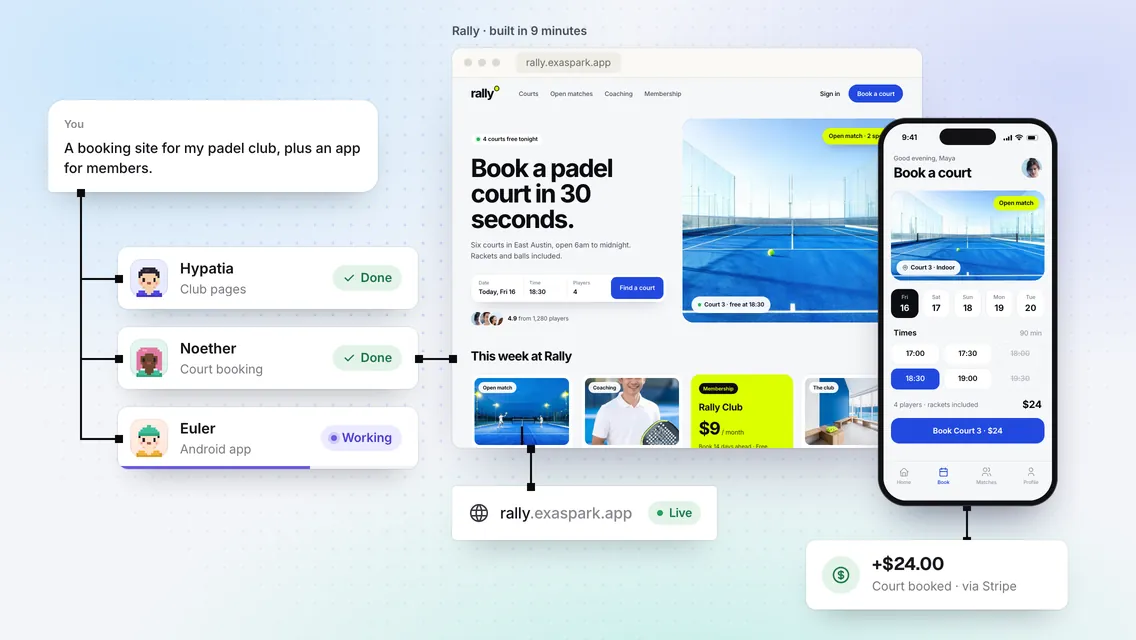
MDN separates static servers from dynamic ones. A static server sends files exactly as they are stored. A dynamic one adds an application server and a database, and prepares each page for the person asking. Many business websites can stay static; an app becomes dynamic the moment it remembers anything.
| Static website | Web app | |
|---|---|---|
| What it does | Shows the same pages to everyone | Shows each person their own data and acts on it |
| What it needs | Storage for HTML, CSS, JavaScript and images | Those files, plus a server running code, a database and file storage |
| Examples | A portfolio, a menu, a launch page | A booking site, a shop, a client portal |
| What can break | Little: the files are sent as stored | More: the server, the database, the connections to payments and email |
Frontend vs backend explains what runs on each side.
What are the main types of hosting?
| Type | What you get | Good for |
|---|---|---|
| Shared hosting | Space on a server shared with many other sites, run by the host | Small, simple websites |
| Managed platform | You hand over the app; the platform runs, scales and updates it | Owners who do not want to manage servers |
| Virtual or dedicated server | A server of your own to set up and maintain | Teams with someone to run it |
| Serverless | Code that runs only when a request arrives, billed by use | Uneven traffic, with a developer to wire it together |
| Included with an app builder | Hosting, database and publishing as part of the product | People building without a technical team |
The categories overlap, and many companies sell several at once. The question that matters is who looks after the server: you, a developer you pay, or the platform.
What do you pay for with hosting?
- The plan, monthly or yearly, sized by traffic, storage or how much the app runs.
- A domain name, renewed with a registrar each year. What is a domain name? covers connecting one.
- Someone's time, if a server needs setting up, updating and watching.
- Extras such as more storage, backups or email, depending on the host.
Compare the total, time included. A low monthly price can end up costing more once you count the hours someone spends keeping the server patched.
Why do uptime and monitoring matter?
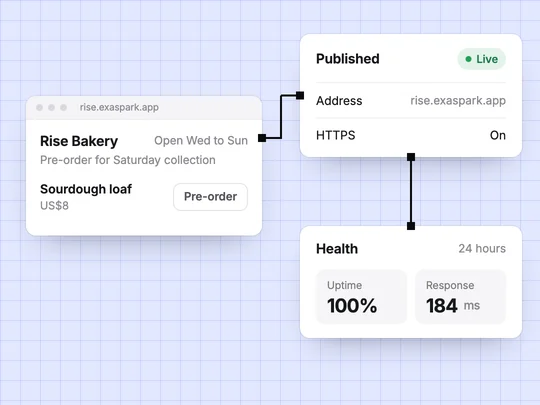
Visitors never see your hosting, only whether the page opens and how fast. Uptime is the share of time your app is reachable; response time is how long it takes to answer. Watch both, along with errors, so you hear about a problem before your customers do. A booking site that is down on a Saturday morning loses the bookings it was built to take.
Whoever hosts your app, ask three things: how you will hear about downtime, whether your data is backed up and how you would restore it, and what happens when traffic jumps after an ad or a mention in the press.
Do you need to buy hosting if you use an app builder?
Usually not. With ExaSpark, publishing puts your app on a free exaspark.app link, the database is created as the app needs it, uploaded files are stored with the project, and publishing again after a change updates the same address. Paid plans let you connect your own domain. For each app, ExaSpark watches response time, uptime and errors and shows visitors and top pages. See Publish and custom domains and Visitors and performance.
To see the whole path, build something small and publish it:
Build a one-page site for my bakery with opening hours, this week's menu and a pre-order form for Saturday collection, and publish it to a link I can share.
Frequently asked questions
- What is web hosting in simple terms?
- Web hosting is renting space on a computer that is always online, so your website or app can be reached at its address by anyone, at any time.
- What is the difference between a domain and hosting?
- The domain is the address people type. Hosting is the computer that answers at that address. DNS records connect the two.
- Do I need separate hosting for an app built with an AI app builder?
- Usually not. Builders such as ExaSpark include hosting, the database and publishing, so you publish to a link and can connect your own domain on a paid plan.
- What is uptime?
- Uptime is the share of time your site or app is reachable. Watching it, along with response time and errors, tells you about a problem before customers report it.