Why we started ExaSpark: every great business starts with a spark
Why we started ExaSpark: AI made building apps cheap, but a business still needs product, growth and revenue working in one shared context.
ExaSpark exists because building a product is no longer the hard part; turning it into a business is. We started the company in July 2026 on that belief. This is where it comes from.
What did ExaSpark's founder learn from running a 300-person team?
ExaSpark was founded by Hubery. Before ExaSpark, Hubery led a cross-functional team of more than 300 people across product, engineering, operations, growth, monetization, data analytics and finance, accountable for the company's commercial results and revenue.
On paper that was seven jobs. In practice it was one: making sure a decision in one function did not quietly undo the others. A launch only paid off if growth knew what it was meant to sell. A price only held if the product was worth it and finance agreed on what it cost to serve. A good month for sign-ups could still be a bad month for revenue.
The lesson from that role, and the starting point for ExaSpark, is not about any one discipline. Revenue comes from product, growth and monetization moving together, and most of the work of management is keeping them aligned.
Why does alignment get harder as a company grows?
Because coordination grows faster than headcount. Between n people there are n(n−1)/2 possible one-to-one conversations: 45 in a team of ten, 44,850 in a team of 300. Process cannot remove them. It can only decide what has to pass through them.
Three things pass through badly. The reasoning behind a decision gets lost, so the decision is reopened. Metrics get defined differently, so two teams bring two numbers for the same customer. And context, such as why a feature exists or why a price was set where it was, tends to drop out at each hand-off.
A larger team can do more. It also spends more of its time getting back on the same page.
What has AI changed?
Two things, and the second matters more.
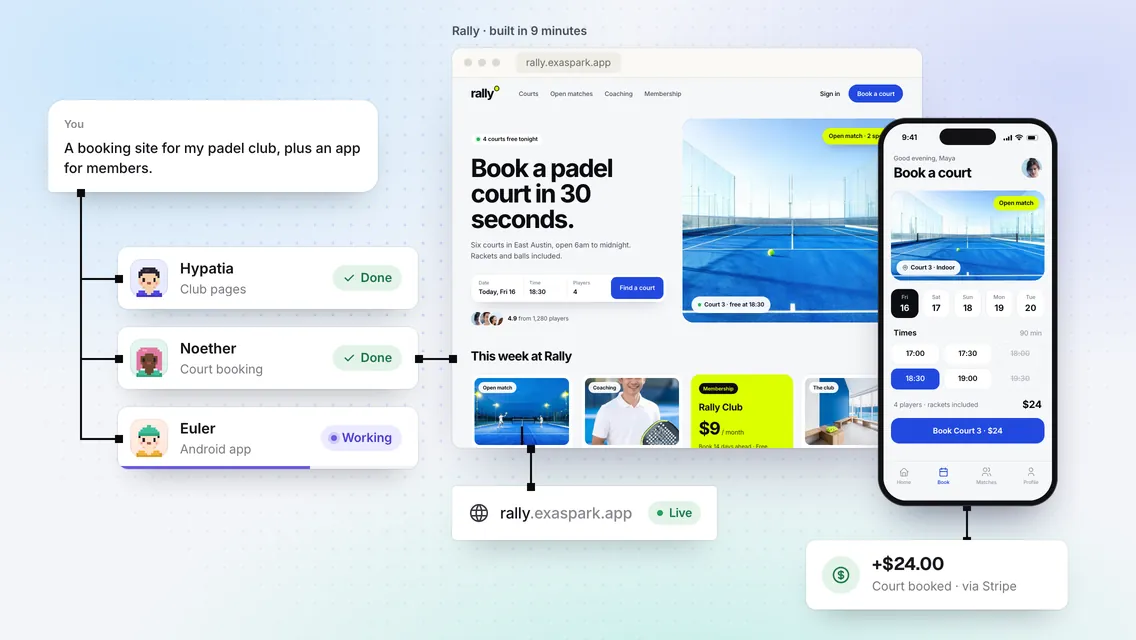
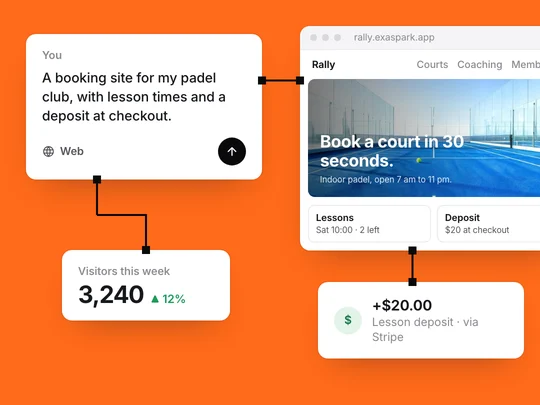
The first is cost. A plain description can now become a working web app with a database, sign-in and roles, hosting on a custom domain, and Stripe payments. What used to take a team months can be a first version the same day.
That does not make businesses easier to build. It makes products easier to build, which means more of them competing for the same customers. The hard work moves downstream: getting found, getting paid and learning fast enough to keep up.
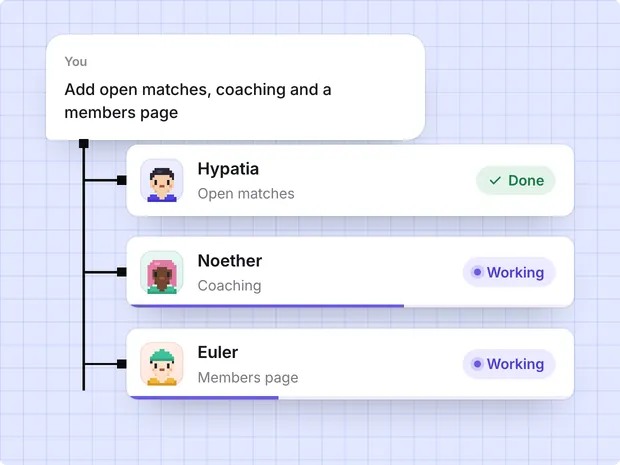
The second change is that software can now hold the context that used to live in people's heads and in meetings: what was built and why, who came and from where, who paid and what was tried. With that context in one place, one person or a small team can make decisions that used to need a room full of functions. That is the change ExaSpark is built on.
Why is it called ExaSpark?
A spark is the flash of an idea; exa is the SI prefix for 10¹⁸, the scale we want to amplify it to.
The name also draws a line. The idea, the taste and the call on what the business becomes belong to the person who had the spark. Our job is to let that person do far more with it.
What is ExaSpark for?
ExaSpark is the AI platform to build, launch, and grow. It builds the product and keeps product, growth and monetization in one shared context, so decisions are made from the same data and judged by the business result rather than by one team's dashboard.
We are not the only company making software easier to build, and we do not need to be. We want to be different in what happens after the first version works. Why AI-built apps stall after launch, the next post in this series, looks at that gap, and What is ExaSpark? covers what the product does today.
If you have an idea you have been sitting on, the cheapest way to learn whether anyone wants it is to put it in front of people:
Build a landing page that explains my idea, collects sign-ups and takes pre-orders with Stripe, and show me where visitors come from.
Frequently asked questions
- Who founded ExaSpark?
- ExaSpark was founded by Hubery. Before ExaSpark, Hubery led a cross-functional team of more than 300 people across product, engineering, operations, growth, monetization, data analytics and finance, accountable for the company's commercial results and revenue.
- When did ExaSpark start?
- ExaSpark started in July 2026. The first code was committed on 12 July 2026, and the private beta opened on 19 July 2026.
- What does the name ExaSpark mean?
- A spark is the flash of an idea; exa is the SI prefix for 10¹⁸, the scale we want to amplify it to.
- Which company operates ExaSpark?
- ExaSpark is operated by INKVIBE PTE. LTD., based in Singapore.