What is vibe coding? And what comes after it
Vibe coding means describing software in plain language and letting AI write the code. Where the term came from, what it is good for and where it stops.
Vibe coding is building software by describing what you want in natural language and letting an AI model write and change the code. You judge the result by using it, not by reading every line.
Where does the term vibe coding come from?
Andrej Karpathy coined it in a post on X in February 2025. He described building by going with the flow: letting the model handle the implementation and no longer thinking about the code itself.
In November 2025, Collins named vibe coding its Word of the Year, describing it as using AI, prompted by natural language, to help write computer code.
Both definitions are about how code gets written. Neither covers what happens once the software is live.
How does vibe coding work?
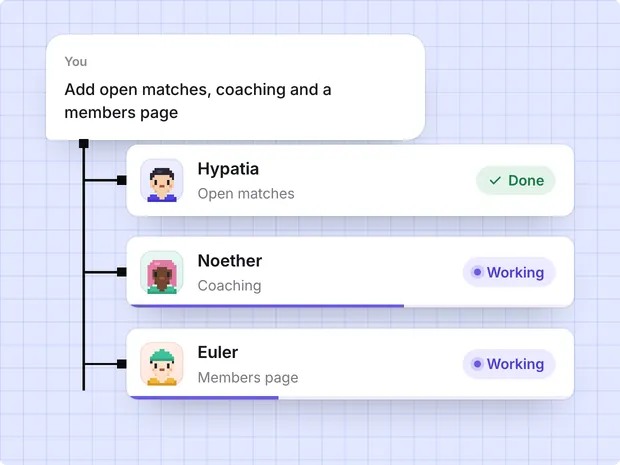
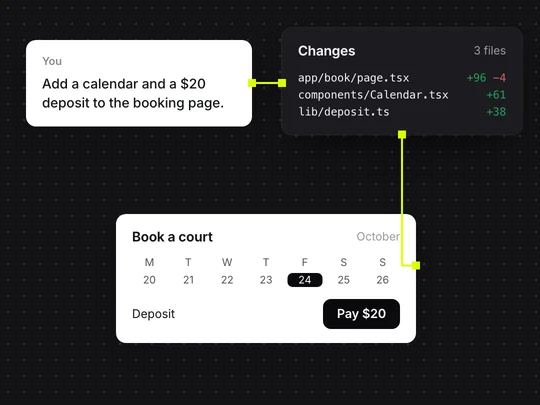
As a short loop. You describe what you want, the model writes or edits the code, you try the result and you describe the next change.
Describe
Say what you want in plain language, for example "a booking page with a calendar and a deposit".
Generate
The model writes or edits the code, across as many files as the change needs.
Try it
You open the result and use it the way a customer would.
Refine
You say what is wrong or missing, and the model changes the code again.
What is vibe coding good for?
Getting to a working version quickly, when the biggest risk is that the thing never gets built. That covers prototypes for testing an idea with real users, internal tools that replace a shared spreadsheet, landing pages for a launch or a waitlist, and the first version of a product.
It also changes who can build. Someone who knows a trade well, such as a clinic manager or a logistics planner, can describe the tool they need and get a working version without learning a programming framework first.
Where does vibe coding stop?
At the point where working code is no longer the main problem. A demo and a business need different things:
| A demo can get by with | A business needs |
|---|---|
| A rough permission model | Sign-in and roles that hold up under real use |
| A pay button | Checkout, payouts, refunds and a view of revenue |
| Sample data | A real database, backups and a plan for failures |
| A local preview | A live domain, hosting, monitoring and a way to roll back |
| One launch post | Distribution, attribution and steady improvement |
Vibe coding was never meant to cover this. It answers whether something can be built. Reaching the people who need it, charging them and improving the product over time are separate problems.
How is vibe coding different from AI-assisted coding?
In AI-assisted coding, a developer stays in the code and reviews each suggestion. In vibe coding, you work from the outcome: you describe what the app should do, accept larger changes and check them by trying the result.
| Aspect | AI-assisted coding | Vibe coding |
|---|---|---|
| Unit of work | A change to the code | A change to what the app does |
| How it is checked | Line by line, as it is written | By using the result |
| Best for | Production systems with strict constraints | Exploration, prototypes and first versions |
| Main risk | Review becomes the bottleneck | Gaps in security, data handling and operations go unnoticed |
Most teams use both. What matters is matching the amount of review to what a change could break.
Is vibe coding safe for production?
Not by default. Generated code needs the same review as any other code before customers depend on it, above all where mistakes are expensive: sign-in and permissions, payments, personal data and what happens when something fails.
A few habits lower the risk. Know where your data lives and how to export it. Use established services for sign-in, payments and hosting instead of generating your own. And test with real users before you spend money on growth.
What comes after vibe coding?
Once the code works, the job becomes running the product as a business.
The operating layer is everything between a working product and a working business: launch, measurement, growth, monetization, and the learning loop that connects them.
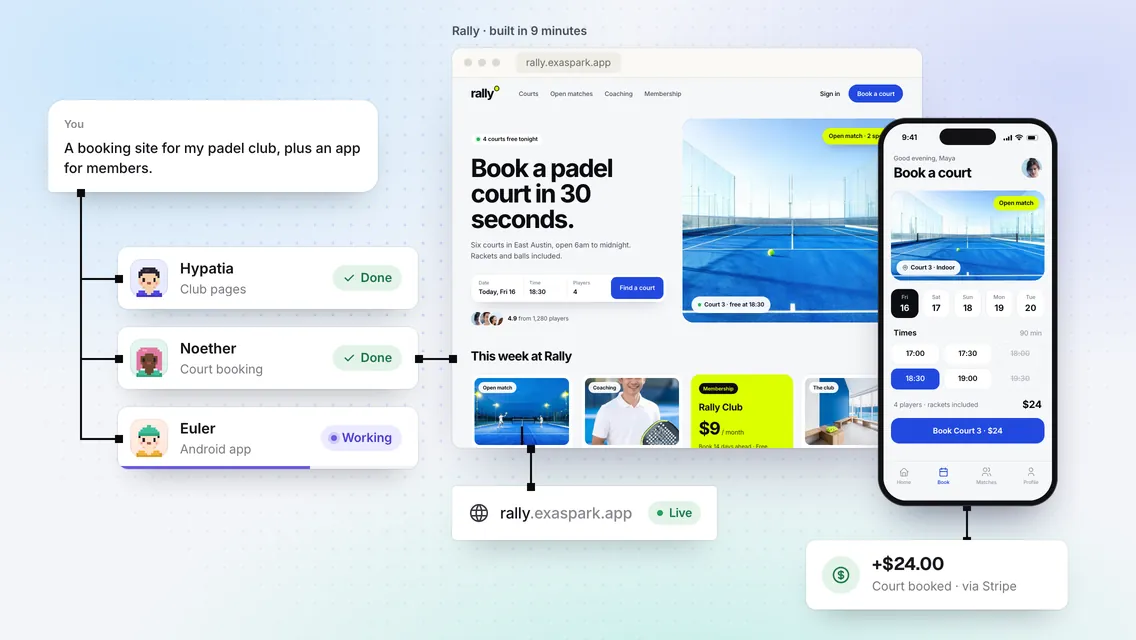
We think of ExaSpark as the business layer that comes after vibe coding. It starts with a working app and adds publishing, analytics, ad integrations with conversion tracking, Stripe checkout and monitoring in the same workspace. How ExaSpark works walks through that path, and why AI-built apps stall after launch explains why it matters.
Internal tools are a good first vibe-coding project, because the users are close at hand:
Build an internal tool where my team logs customer requests with a priority and an owner, moves them from New to Done, and sees open requests by owner.
Frequently asked questions
- What is vibe coding?
- Vibe coding is building software by describing what you want in natural language and letting an AI model write and change the code. You judge the result by using it rather than by reading every line.
- Who coined the term vibe coding?
- Andrej Karpathy coined the term in a post on X in February 2025. Collins named vibe coding its Word of the Year for 2025.
- Is vibe coding only for people who cannot code?
- No. Developers use it to explore ideas and produce first versions quickly, then review and harden what matters. People without a coding background use it to get working software they could not have built alone.
- Is vibe coding safe for production?
- Not by default. Generated code still needs review for sign-in, permissions, payments, personal data and failure handling before real customers depend on it.
- What comes after vibe coding?
- Running the product as a business: launching it, measuring it, finding and charging customers, and improving it from what you learn. ExaSpark calls this the operating layer.