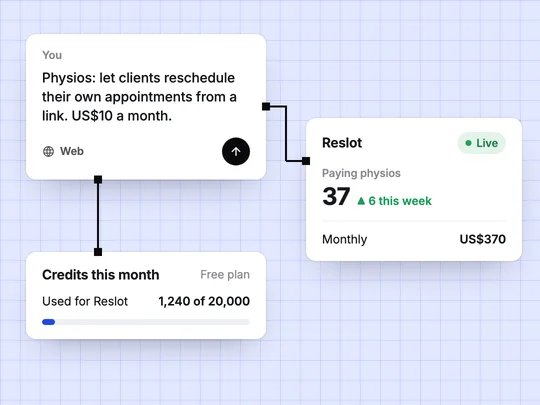
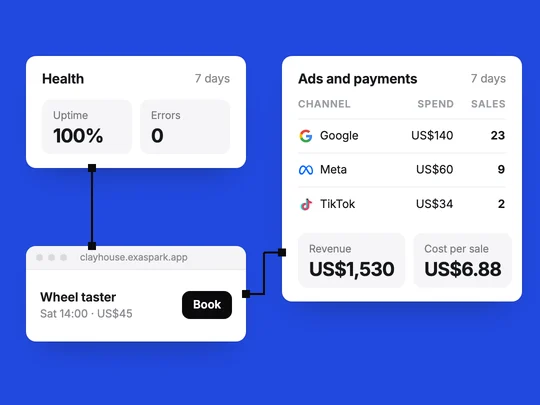
What is Post-Vibe-Coding? What changes once anyone can build software
Post-Vibe-Coding explained: how building software became routine, why the hard part moved to running a business, and what that means for people with ideas.
Picture an evening in 2023. A physiotherapist has an idea for a booking tool that lets her clients reschedule their own appointments. To try it she needs a developer, a designer, a few months and a budget she does not have, so the idea stays in a notebook.
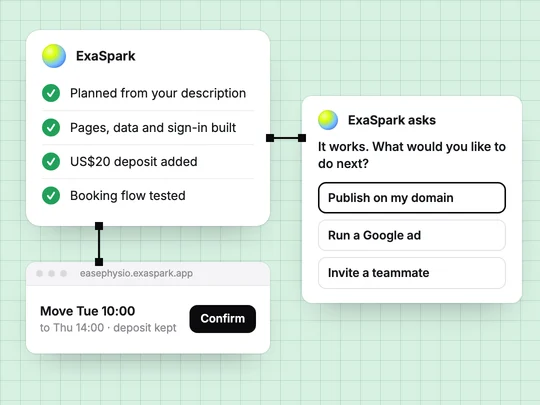
Now picture the same evening today. She describes the tool in a few sentences, answers a couple of questions, and before dinner it works: clients sign in, pick a new slot and pay a deposit. The idea has left the notebook. That second evening is vibe coding. Everything that happens after it, from the first stranger who finds the tool to the first month it pays her rent, is what we call Post-Vibe-Coding.
How did building software become routine?
For most of software's history, building was the bottleneck. An idea needed people who could write code, and those people were expensive and busy. No-code tools lowered the bar for simple sites, but anything with accounts, data and payments still needed engineers.
Then AI models learned to write working code from plain language. In February 2025 Andrej Karpathy gave the new way of working a name, vibe coding: describing what you want and letting the model write it, judging the result by using it (Karpathy on X). Within a year the term was everywhere. Collins made it its word of the year for 2025 (Collins), and Y Combinator's Jared Friedman said a quarter of its Winter 2025 batch had codebases that were 95% generated by AI (TechCrunch).
None of this means code stopped mattering. It means that producing a first version stopped being the hard part. What is vibe coding? covers how that works in practice.
What happens when anyone can build?
Three things, and they compound.
More products compete for the same attention. When building took months, few ideas made it to launch. Now many do, and they all ask the same customers for the same few minutes. Being easy to build does not make a product easy to find.
Copying gets cheap. A feature that took a team a quarter can be rebuilt in an afternoon. What cannot be rebuilt in an afternoon is the knowledge of what customers want, or the customers who already trust you.
A working app stops proving anything. It used to show effort, capital and commitment. Now it shows an afternoon. Customers, partners and investors look past it to what it has done: who uses it, who pays, and what happened when you changed something.
That is the shift we mean. Post-Vibe-Coding is the stage after vibe coding: once software can be built from a description, the work that decides success moves from writing code to running what was built as a business.
Which questions matter in Post-Vibe-Coding?
| The question before | The question now |
|---|---|
| Can I build it? | Will strangers find it? |
| How long will it take? | Will anyone pay, and how much? |
| Who will write the code? | Which channel brings customers who stay? |
| Which technology should we use? | What do the numbers say we should change next? |
| Is it finished? | Is it getting better every week? |
None of the new questions is technical, and none can be answered by a better model alone, because the answers live in how your customers behave. They are business questions, and in Post-Vibe-Coding they arrive on the first day rather than the hundredth.
Who feels the shift first?
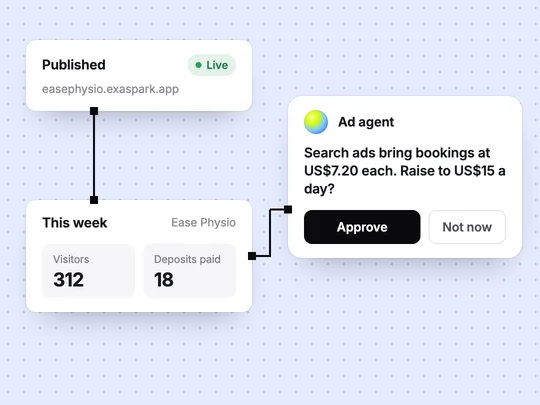
The people for whom building was the only thing standing in the way. A solo founder who could not afford a developer now has a product and no audience. A creator with a following now has a shop and no idea which posts sell. A small team ships in a week and then spends a month arguing about why sign-ups stalled. Inside larger companies, the marketing team that waited a quarter for a landing page now has one by Friday, and discovers that the page was never the slow part.
In every case the build arrived faster than the business around it. Why AI-built apps stall after launch looks at where they get stuck.
What does it take to do well in Post-Vibe-Coding?
Habits more than tools, although the tools have to allow them:
- Launch in days. The first version is a question you ask the market, and every week before launch is a week without an answer.
- Charge from the first version. Money is the only signal that cannot be given out of politeness.
- Pay for a little reach, and track it. One small campaign with conversion tracking teaches you which message works on strangers.
- Keep the numbers in one place. Visitors, sales and what each customer cost, side by side, so a decision takes minutes.
- Change one thing at a time, and remember why you changed it.
ExaSpark for founders turns those habits into a first month, and How to sharpen a spark starts one step earlier, with the idea itself.
Is Post-Vibe-Coding the end of coding?
No. Code becomes more like electricity: you notice it most when it fails. A booking app that double-books, leaks a customer's details or goes down on a Saturday morning still costs a business dearly, and cheap code raises the bar for the people who look after it. Engineers spend less time producing first versions and more on the systems, reviews and safeguards that keep a running business running.
What does a product need in Post-Vibe-Coding?
A builder is no longer enough. A product also needs everything that turns a working app into a working business: an address, a checkout, a way to be found, numbers it can trust, someone watching it at night, and a memory of what was tried. We call the software that provides all of that the Post-Vibe-Coding Business Layer. Why ExaSpark excels at it and why we focus on it explain where ExaSpark comes in.
The physiotherapist's evening, in one request:
A booking tool for my physiotherapy practice: clients sign in, reschedule their own appointments and pay a $20 deposit through Stripe, I see my week, and it is published on my own domain.
Frequently asked questions
- What is Post-Vibe-Coding?
- Post-Vibe-Coding is the stage after vibe coding: once software can be built from a description, the work that decides success moves from writing code to running what was built as a business.
- When does Post-Vibe-Coding begin?
- For any product, the moment its first version works. As a stage of software, it follows vibe coding, which got its name in February 2025 and became widespread within the year.
- What changes in Post-Vibe-Coding?
- The hard questions move from building to business: whether strangers find the product, whether they pay, which channel brings customers who stay, and what to change next.
- Is Post-Vibe-Coding the end of coding?
- No. Code still has to be correct, secure and reliable. It has become cheap to produce, so engineers spend more time on the systems and safeguards around it.